Fabricated Images and Digital Extortion
What We Are Talking About
There are many tools that generate composited images that look real, using an ordinary photograph of a real person. The original photograph may come from a family occasion, a public account, or a class photo, and the result is material that can be used for defamation or extortion.
This has become a regulatory file and not merely a phenomenon. In April 2026, US Senator Jon Ossoff sent official letters to Apple, Google, Meta, Amazon, and X regarding the spread of these apps through their stores, citing that 16% of American adolescents between thirteen and seventeen know someone who was targeted with fabricated images while a minor.
Why the School Is Concerned
Because the incident may begin and spread inside the peer network, and the school is the only place that brings all the parties together.
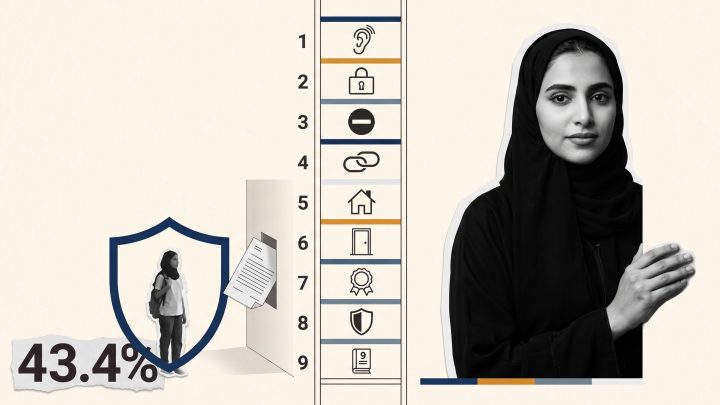
And because the student usually will not tell the school of his own accord. In a Saudi study of adolescents between eleven and seventeen, 43.4% said they would not tell the school if they were subjected to online harm.
What that figure means is that what reaches you is late, and that what does not reach you is more.
The Protocol: Nine Steps
Believe the report immediately. And the first sentence said to the student: thank you for telling us, and you did nothing wrong. A student who feels he is being accused will walk back the report within an hour.
Do not delete anything, and do not ask the student to delete. Evidence is documented before any action is taken: screenshots, account names, dates, and links. Early deletion is the most frequent mistake in these cases and the most costly.
Do not circulate the material inside the school while verifying. Do not send it between teachers or in the administration group, since every transfer widens the harm and complicates the legal position.
Inform the school leadership and the student counselor immediately. This kind of case is not handled within one person’s knowledge.
Contact the affected student’s family the same day, in the language of facts rather than alarm, setting out what has been done so far and what is coming.
Deal with the suspected student away from an audience. Summoning him in front of his classmates spoils the investigation and turns the incident into material everyone passes around.
Refer to the statutory framework. The Child Protection Law defines a child as anyone who has not passed the age of eighteen, and its Article Twenty-Two requires immediate reporting upon learning of a case of abuse or neglect. And the domestic violence and child protection reporting line 1919 is available around the clock and covers harm to children inside the family and outside it.
Put a protection plan in place for the following two weeks. The greater harm is usually not the material itself but the second wave: the looks, the whispering, and the comments in the corridors. The plan includes a responsible adult following up with the student daily, an arrangement for break times, and a clear message to the class that resharing is a violation with consequences.
Document everything: what arrived, when, who was informed, and what was done. Documentation protects the student and protects the school.
As for the Student Who Made the Material
The school is concerned with him too, not merely as an offender.
Many of these cases at this age have behind them going along with a group, or a dismissiveness about the effect of what he did because he never saw its result, or a desire for status. There is no minimizing of the gravity of the act in this, but it does determine the handling: clear accountability alongside a counseling intervention, rather than punishment on its own.
And the question that opens up his understanding is not: why did you do this? It is: imagine this image were of your sister or your brother — what would you have done? Moving from the act in the abstract to a specific person is what breaks the anesthetic the screen provides.
Who Leads This File in the School
Long before the incident, the answer should be known by name: who receives the report? Who documents? Who contacts the family? And who decides on external escalation?
Four roles, which two people may cover between them in a small school. What matters is that they be written down rather than improvised, because cases of this kind usually fail at the handover from one person to another, not at the point of decision.
Five Things Not to Do
The victim is not to be asked to ignore the matter. The two parties are not to be brought together in one room to be reconciled. The student is not to be promised absolute confidentiality; he is told honestly: I will only tell the people who can help. The matter is not to be turned into a classroom sermon about clothing or photography. And what can be documented today is not to be put off until tomorrow.
Prevention
One lesson a year for each class is enough to cover four messages: that an ordinary photograph is all it takes to make fabricated material; that sharing the material, not making it alone, is participation in the harm; that the victim is not to blame; and that there is a reporting route every student knows by name.
To this is added a reporting route that requires no confrontation. Since a large proportion of students will not tell the school face to face, the school that provides an indirect reporting method — an online form or a box — receives information that reaches no one else.
It is worth mentioning in this context that the European Union guidelines on the protection of minors issued in July 2025 recommend that platforms take preventive measures, among them restricting screen capture and downloading of content created by minors. It is an idea worth explaining to students: what you post today is the raw material for what may be made tomorrow.
The school that writes this protocol today and places it in its handbook will act a year from now with calm and professionalism. The school that waits for the incident in order to decide will make its decisions at the worst possible moment — the moment when its student is at his weakest.