Adolescents Are the Loneliest Group in the World
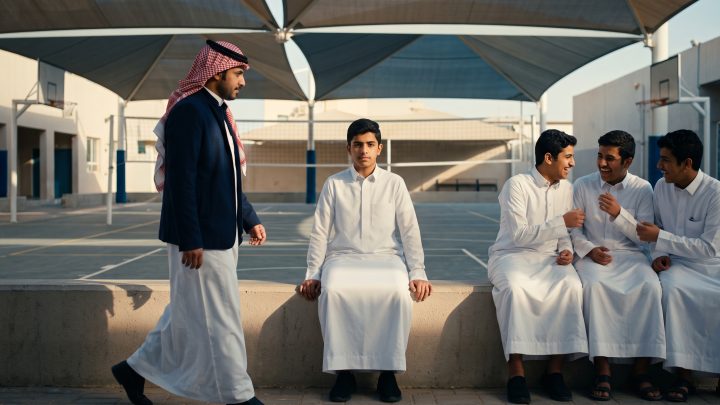
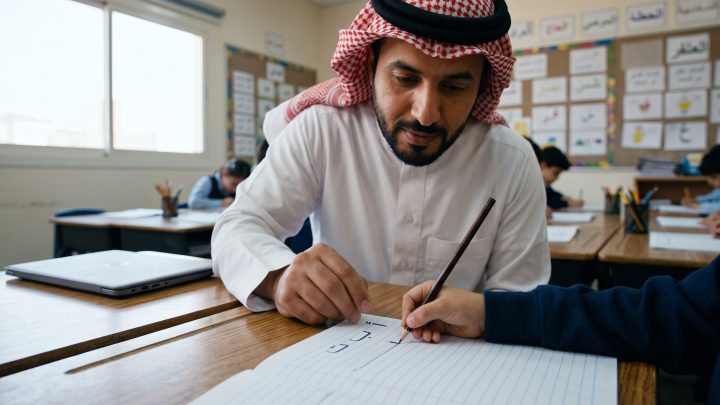
In every school there is a student the teachers pass by without concern. He has a group he sits with at break, he joins in the joking, and his grades are decent enough.
And if he were asked: who is the person you can tell when something is bothering you? he would not find a name.
When loneliness is mentioned, the mind goes to an elderly person in an empty house. That image is not wrong, but it is not the most common one.
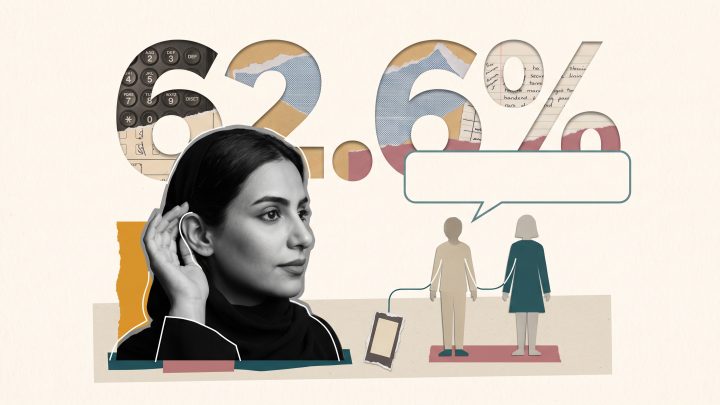
In the World Health Organization Commission on Social Connection report issued in June 2025, the proportions came out differently from what we imagine: 20.9% of the 13–17 age group feel lonely, compared with 11.8% of those over sixty. Adolescents are the highest group among all those measured.
And there is a price for this: the report estimates that loneliness and social isolation are associated with around 871,000 deaths a year worldwide.
“Social Health” as a Third Pillar
What this line of research proposes is that we treat social connection as a health pillar in its own right, alongside physical and mental health.
What that means is that the question “how many real friends does he have?” is not a light social question. It is a health question in the precise sense.
Why Adolescents in Particular
There are three reasons, overlapping with one another.
The first is that expectations are high. An adolescent expects more of friendship than a child does — closeness, understanding, loyalty. And the gap between what he expects and what he finds is what causes the feeling of loneliness, not the bare number of friends.
The second is that comparison is constant. He sees, every day, gatherings he was not invited to. Feeling excluded has become visible and documented, where once it passed without his knowing about it.
The third is that disclosure is harder. Admitting to loneliness at this age amounts to admitting to a social failure, so it is carefully hidden, and usually behind an appearance of being busy.
And this brings us back to the student at the beginning of the article: the number measures nothing. An adolescent surrounded by twenty people every day may be entirely alone, because the matter is not how many people are around him but whether there is one person he can say to what he says to no one else.
What About Our Saudi Context?
The local figures point in the same direction from another angle.
In the Saudi National Mental Health Survey, the lifetime prevalence of any psychological disorder among young people reached 40.1%, while only 14.47% of those affected received any treatment in their lifetime. And in a Saudi study of adolescents between eleven and seventeen, 20.2% said they would not seek help from anyone if they were subjected to online harm.
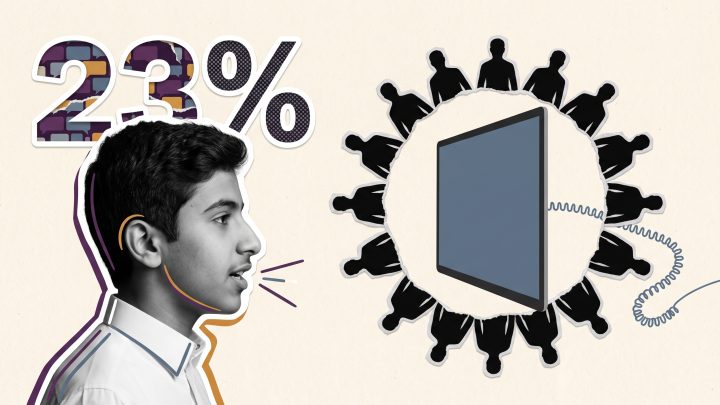
Conversely, a British report found that 23% of the most vulnerable children say outright that there is no one other than chatbots they talk to, and they are themselves the highest users of chatbots as a substitute.
Loneliness, then, does not stay a vacuum. Something else fills it.
The Difference Between Withdrawal and Disconnection
This distinction is the most important thing a parent and a counselor both need.
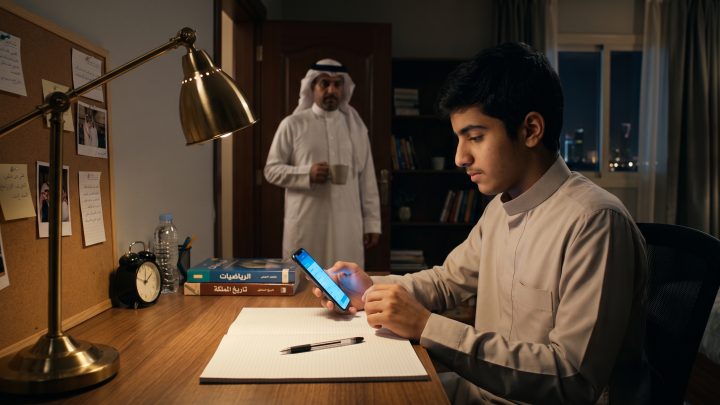
Withdrawal is normal: he talks less at home, spends longer in his room, and prefers his friends to his family. This is development, not a symptom.
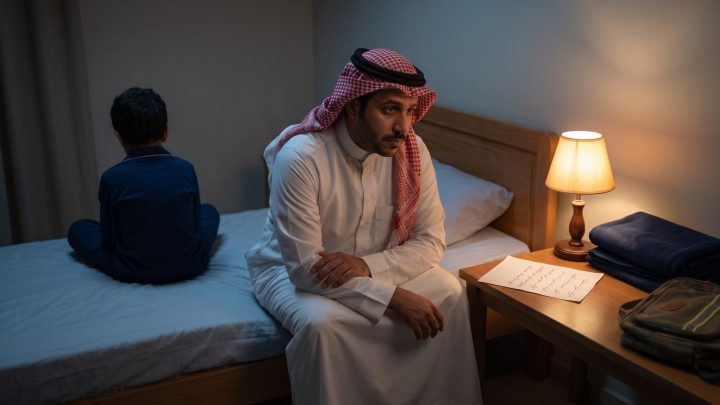
Disconnection is worrying: leaving activities he used to love, the names of friends disappearing from his conversation entirely, changes in his sleep or his eating, stopping going out altogether, and saying things that suggest he is a burden on those around him.
The practical rule is that withdrawal concerns you, while disconnection concerns his whole life. The first does not call for intervention; the second calls for it immediately.
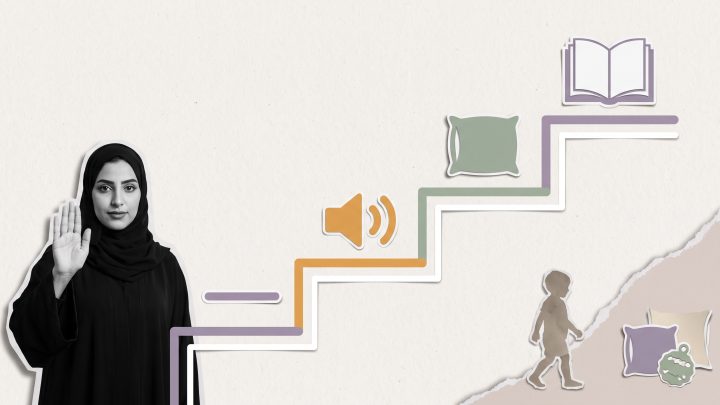
Six Steps for the Family
Do not ask him: do you feel lonely? He will not answer. Ask instead: who did you sit with today? — a question about facts rather than about feelings.
Make meeting up easy rather than talking about it: the lift, the hosting, the unscheduled time. An adolescent does not build a friendship through advice but through shared time.
Connect him to an activity with a face to it: a club, a team, or volunteer work. Friendship at this age is built side by side around an activity.
Do not make light of what he tells you. Saying “these are small things” closes the door. The situation that looks minor to you may be the event of his week.
Talk about your own feelings at his age. Nothing eases things for an adolescent more than knowing that what he feels is not a flaw in him.
Protect at least one connection: an uncle, a cousin, a teacher. The adolescent who has one adult besides his parents that he trusts is in an entirely different position.
A Note on Transitions
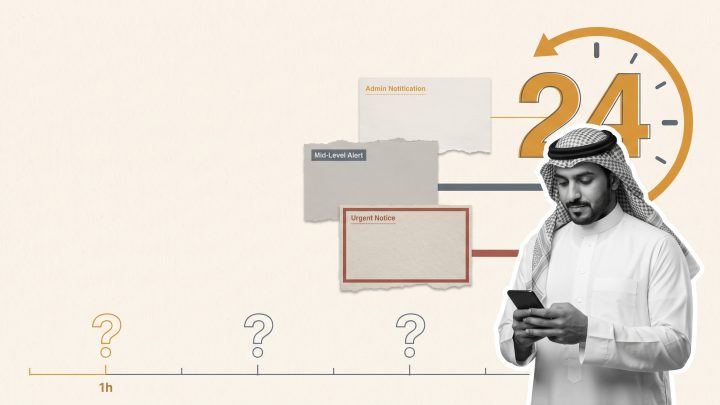
Loneliness is not distributed evenly across the year, and it has three peak points: moving to a new school; the first weeks of the school year, when the groups are re-formed; and the period after long holidays, when a student is cut off from his circle for weeks and returns to find something has changed in his absence.
The family that knows these points intervenes before the need arises: asking more in the first two weeks, opening the house to visits at the start of the year, and not waiting for him to complain. At these points in particular, an adolescent is least able to complain.
For the Student Counselor
There are three high-yield practices. The student who sits alone for two weeks running deserves a conversation. Using small activities rather than large ones, since a task for two is more use to a withdrawn student than a major event. And asking for a name: who is your closest friend at school? The student who cannot find a single name to give may be suffering from loneliness.
When to Seek Specialist Support
If the disconnection continues for more than two weeks, or is accompanied by a clear change in sleep, eating, or schoolwork, or despair or a hint of self-harm appears in what he says, then the matter has gone beyond the bounds of family support. Speak to the student counselor and request specialist support without delay.
Loneliness is not a weakness in your child’s character. It is a condition more common at his age than at any other, and it is among the most responsive of conditions when someone notices it early.