Why Don’t Your Children Tell You?
In a Saudi study published in 2026 on 302 adolescents between the ages of eleven and seventeen, participants were asked what they would do if they were subjected to cyberbullying.
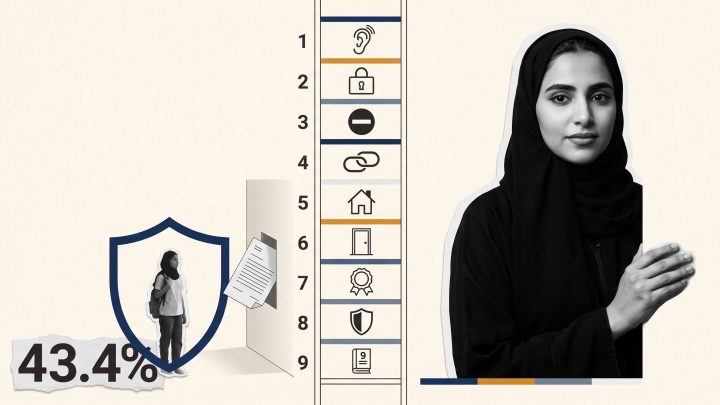
The results deserve to be read slowly. 20.2% would not seek help from anyone; 58.6% agree that they would simply ignore the matter; 43.4% would not tell the school; and 15.6% had received no education about digital safety, neither from home nor from school.
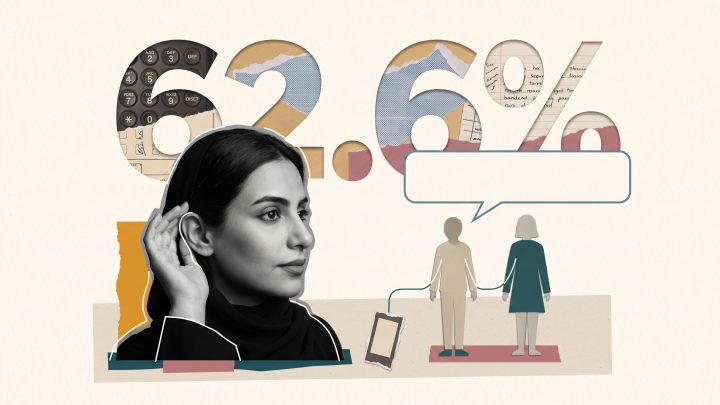
As for the number that changes everything, it is the last one: 62.6% would seek help from their parents.
What this means is that the highest leverage point in the entire system is not the school, nor the app, nor the awareness campaign. It is you.
Why This Matters So Much
Because what is not said is not treated.
In the Saudi National Mental Health Survey, the prevalence of any psychological disorder among young people reached 40.1%, while only 14.47% of those who developed a disorder received any treatment in their lifetime.
This gap is not explained by a shortage of services alone. A large part of it begins in a living room, in a moment when a son or daughter decided to say nothing.
Four Reasons He Does Not Speak
The first is fear of confiscation. He knows the first reaction may be taking the phone away as a punishment, so he does the math this way: bearing the harm in silence is easier than losing his entire social world.
The second is fear of his parent’s reaction rather than of the problem itself. He does not fear the situation as much as he fears his father erupting, or calling the school, or confronting his classmate’s family.
The third is his belief that it will do no good. The study found that a sizable proportion of adolescents see reporting as something that will change nothing. And the child who tried once and saw nothing change will not try a second time.
The fourth is shame and a sense of responsibility. Many children think that what happened is their fault, especially if they had broken a rule beforehand — went into a forbidden app, or talked to someone they did not know.
Six Behaviors That Make You a Parent Close to His Children
Make the phone non-confiscable when he reports. Say this sentence explicitly before it is needed: if something upsetting happens to you on the phone, come and tell me, and the phone will not be taken away from you. Then keep to it when he comes to you, because breaking it a single time is enough to close the door for years.
Practice small daily conversations. A child does not open a big subject with a parent who does not talk to him about small ones. Ten minutes a day on matters of no consequence is the infrastructure the difficult conversation gets built on the day it comes.
Talk side by side rather than face to face: in the car, or while walking, or while the two of you are preparing something. The absence of direct eye contact lowers the tension considerably, and this is noticeable with boys at this age more than with others.
Do not turn every story into a lesson. If everything he tells you ends in a sermon, he will stop telling. Listen sometimes without comment; this is an investment, not neglect.
Talk about your own mistakes. A parent who recounts a situation in which he was wrong gives his child implicit permission to see that a mistake is not the end of the world.
Teach him explicitly, and do not assume he knows what to do. Say it to him word for word: if someone bothers you, don’t reply to him, take a screenshot, and come to me. The study found that education from more than one source — from home and school together — was associated with less resistance to seeking help.
The First Sixty Seconds
When he finally tells you, you have one minute that determines whether he tells you again.
So say: thank you for telling me · you did nothing wrong · I’m with you and we’ll solve it together · do you want me to just listen, or do you want me to do something?
And do not say: why didn’t you tell me before? · I told you not to go into that app · I’m going to the school right now · don’t mind him, just ignore it.
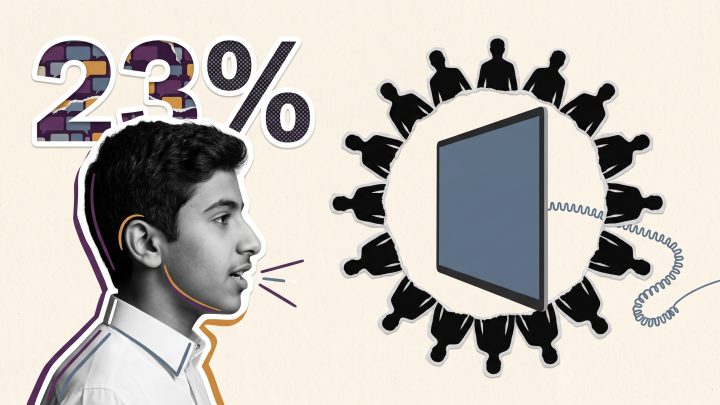
That last sentence sounds wise, and it is in fact teaching a child that ignoring is the solution — which is what 58.6% of them say already, and one of the reasons the problem persists.
What About Younger Children
Between nine and eleven the matter differs a little. A child at this age tells more than an adolescent does, but he tells indirectly: he complains of a stomachache on a school morning, or asks a hypothetical question about “someone in the class,” or refuses to go with no clear reason.
This is not evasion; it is the form of disclosure available to him. The right response is not to chase him with direct questions but to open a door for him: and this friend of yours, what would you advise him to do? Many children tell their story in full once it is attributed to someone else.
When to Go Beyond the Home
If it continues for more than two weeks despite your intervention, or your child’s sleep or eating or school performance changes, or he withdraws from activities he used to love, or something appears in his words suggesting despair or self-harm, then the matter has gone beyond the bounds of family handling. Speak to the student counselor at the school and request specialist support.
And in cases of abuse or exploitation, the domestic violence and child protection reporting line 1919 operates around the clock and covers harm to children inside the family and outside it.
You will not be able to protect your child from everything he will go through, but you can be the first person he thinks of when something happens to him. And that difference is built on ordinary days, not on the day of the crisis.