Longevity: Five Questions That Separate Evidence from Hype
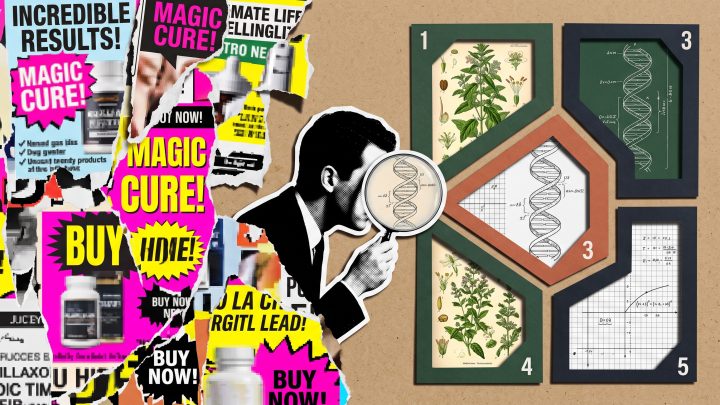
You open your phone during your lunch break to be greeted by a barrage of advertisements: pills promising to “turn back the clock,” tests costing thousands of riyals measuring your “biological age,” and influencers announcing weekly anti-aging breakthroughs.
The problem is not that all these claims are false, but that the fake and the real are presented with the exact same grand tone. Separating the two does not require a Ph.D. in biochemistry; it simply requires five critical questions to ask before spending a single riyal or investing your time.
Categorizing Evidence: Where Does What You Are Offered Fall?
In an analysis published by the global health data company IQVIA (April 2026), common interventions were divided into three tiers:
Supported by Large Clinical Trials: Medications prescribed for specific medical conditions that have proven to reduce mortality and cardiovascular events (such as antihypertensives, statins, and GLP-1 agonists). What matters here is the strength of the clinical evidence, not requesting the medication itself.
Possessing a Promising Biological Basis: Research targeting mechanisms of senescent cells and genetic reprogramming. The results are promising in animals and laboratory settings, but have not yet proven safe and sustainable efficacy in the general human population.
Where Enthusiasm Precedes Proof: Compounds such as resveratrol, spermidine, and NAD⁺ supplements. They have mechanistic rationale and small studies, but lack large randomized trials proving an effective extension of Healthspan.
The paradox is that most products targeting you in ads belong to the third tier, yet they are marketed using the language and illusions of the first tier.
The Five Questions to Verify Any Claim
Whenever you read about a “new scientific breakthrough” or a mind-boggling supplement, run it through these filters:
Who was the study conducted on? Humans, mice, or cell cultures? A result in mice is a promising start to research, not evidence ready for application to you.
What exactly was measured? Did the study measure a temporary biomarker in the blood, or a tangible health outcome like remaining disease-free or maintaining the ability to move and live independently?
What was the size and design of the study? Twenty people for four weeks is an exploratory trial; thousands of people over years is a definitive trial. Randomized allocation is the sole requirement to prove cause and effect.
Who funded the research, and do they sell the outcome? Commercial funding does not invalidate science, but it demands extra caution and a search for independent reviews.
Does it extend healthy years or years of disease? The goal is not merely adding years to the calendar, but protecting your physical and mental capacities during those years.
What Is the Truth About “Biological Age” Tests?
“Epigenetic clocks” are among the fastest-growing products, creating the illusion of analyzing your DNA to determine the precise age of your organs.
However, academic reviews published in peer-reviewed journals (such as Biogerontology and analytical reports in The Conversation in 2026) confirm that these tests remain unreliable for making individual decisions. Their results are influenced by short-term changes such as temporary stress or yesterday’s meal, alongside the absence of a standardized benchmark across laboratories. Medical ethics publications (such as the AMA Journal of Ethics) warn of the psychological harm caused by misinterpreting these numbers.
What Cannot Be Sold in a Bottle?
In a comprehensive study published in the BMJ, adopting four core lifestyle behaviors—refraining from smoking, regular physical activity, Healthy Nutrition, and maintaining a healthy weight—was found to be associated with adding nearly ten healthy years free from chronic diseases.
These four factors carry the strongest human scientific evidence, yet no one spends millions of dollars advertising them on social media platforms—simply because no one can monopolize them or sell them to you in a bottle.
What This Cannot Solve
Possessing these critical questions protects you from draining your money and psychological energy, but it does not eliminate the fact that a significant portion of your Physical Health is dictated by genetic factors, environmental conditions, and the quality of medical care available to you. Following a healthy lifestyle significantly improves your odds, but it is not an absolute guarantee against disease or natural aging.
🎯 This Week’s Exercise: The next time you see an ad for a dietary supplement or a genetic test, apply only the first two questions: Who was the study conducted on? and What did it actually measure? You will discover that over 80% of the marketing hype vanishes instantly.
Conclusion
Longevity is a promising field of research and a marketing space full of noise. Genuine evidence relies on rigorous experimentation, while hype relies on selling quick hope. The most effective factors for your Holistic Wellbeing and Physical Health are free and within your reach today.