Ultra-Processed Foods
Standing in the work break room in front of the vending machine, or checking fast-food options on your phone during an extended meeting, you look for something to quickly satisfy your hunger. You pick a product labeled “light” or “low-fat,” only to find yourself hungry again just an hour later.
The problem is often not the amount of fat or sugar alone, but that the food belongs to “ultra-processed foods”—a category industrially transformed to the extent that your body deals with it in a completely different way.
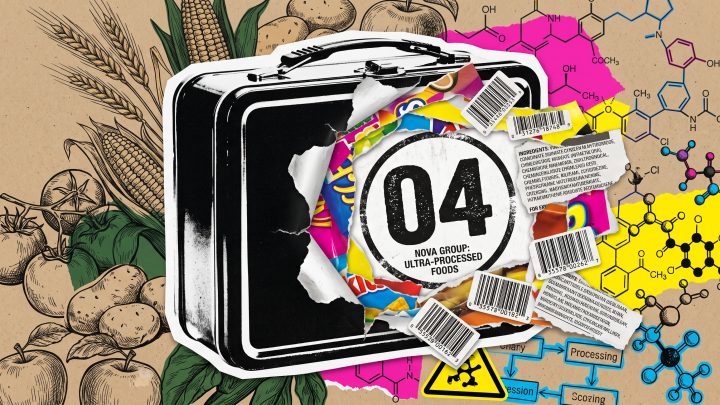
What Is the NOVA System and What Is “Group 4”?
The global NOVA classification system categorizes foods according to their degree of industrial processing into four groups:
Unprocessed or Minimally Processed Foods: Vegetables, fruits, eggs, meats, milk.
Processed Culinary Ingredients: Oil, salt, sugar extracted from Group 1.
Processed Foods: Fresh bread, cheese, simple canned foods like olives and tuna.
Ultra-Processed Foods (Group 4): Formulations created industrially in laboratories and factories from extracted substances, emulsifiers, stabilizers, flavorings, and colorings. The product here is not cooked food, but a chemical structure designed to be consumed faster.
Is It Just About Calories?
A decisive randomized trial conducted at the U.S. National Institutes of Health (Hall et al., 2019) answered this question. Twenty adults stayed at the medical center for 28 days. Participants consumed an ultra-processed diet for two weeks and an unprocessed diet for another two weeks, with an exact match in offered calories, protein, fiber, sugar, and sodium.
The result: When left free to eat until satisfied, participants in the “ultra-processed food” phase ate an average of 508 extra calories per day and gained about 0.9 kilograms over two weeks, while losing the same weight during the natural food phase.
The reason was not the meal composition on paper, but the eating behavior itself: Ultra-processed foods are easier to chew and faster to swallow, causing fullness signals to reach your brain late after you have already consumed a larger quantity.
What Do Local Indicators Say?
An exploratory study conducted at King Abdulaziz University in Jeddah (2025) on 190 young participants showed that high consumption of ultra-processed foods is associated with a higher likelihood of weight gain and abdominal obesity.
However, it is necessary to clarify the limitations of these data: The sample is small and cross-sectional, which does not prove a direct causal relationship. Furthermore, international advisory bodies (such as the U.S. Dietary Guidelines Advisory Committee) classify the strength of observational evidence in this area as “limited.” For this reason, we focus on behavior and practical experience rather than sensationalism.
How Do You Spot Group 4 on the Label?
Three signs are enough to inspect your product in seconds:
An ingredient you do not find in your kitchen: Emulsifiers, stabilizers, artificial colors, flavor enhancers.
Extraction terms: Words like “isolated protein,” “hydrogenated oils,” “modified starch.”
List length: An extended ingredient list that looks more like a chemical sheet than a recipe’s ingredients.
Realistic Daily Swaps
The goal is not complete abstinence, but reducing the percentage through flexible steps:
Instead of packaged baked goods and biscuits: Dates and unflavored nuts (easily accessible and quick to snack on).
Instead of sweetened drinks and packaged juices: Water, or coffee and tea without added sugar (beverages are the easiest item to reduce because they do not provide a feeling of fullness).
Instead of reheated ready meals: A quick assembly of whole-grain bread, simple protein (eggs, tuna, or cheese), with cucumber or tomato for a Nutritious Diet.
What This Cannot Solve
Your awareness of the nutrition label gives you better choices, but it does not eliminate the fact that the work environment and a busy schedule impose limits on your choices.
The absence of fresh options in the company cafeteria or vending machines is not your fault.
The high prices of fresh foods compared to packaged alternatives is an economic reality that requires adaptation, not guilt.
The goal is not to reach a perfect diet completely free of processing, but to reduce your daily reliance on it as much as your daily circumstances allow.
🎯 This Week’s Exercise: During your next break, pick up the first packaged product you buy and read the ingredients list. Look for just one name you do not know and do not keep in your kitchen.
Conclusion
Ultra-processed foods were designed to be eaten faster and bypass your body’s satiety signals. Reducing them does not require a strict diet; it simply requires a brief pause to pay attention to what you read on the wrapper. Small, sustainable changes protect your daily energy and support your overall Physical Health.
🌙 Your Action Step Tonight: Open your kitchen cabinet or refrigerator, and check the label of one product you eat daily. If you find a long list of ingredients containing emulsifiers or flavorings, identify another fresh alternative for your coming week.