Buy Now, Pay Later
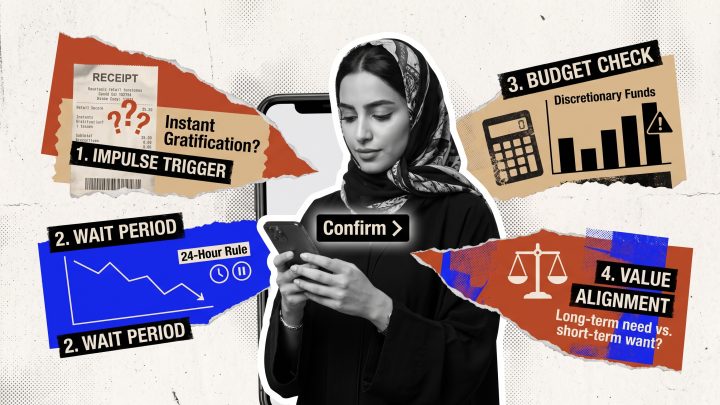
You reach the checkout screen, and the total amount appears, with an option underneath reading: “Split into 4 interest-free payments.” With a single click, the amount you pay today drops to a quarter, making the option seem reasonable and enticing.
Buy Now, Pay Later (BNPL) is neither a trap nor a magic solution; rather, it is a short-term financial commitment with governing rules and details that impact your monthly budget.
📌 When to Consult a Financial Advisor?
Behavioral planning tools manage routine obligations. However, if your monthly installments exceed a third of your income, or if you struggle monthly to cover basic expenses or default on payments to BNPL providers, this is a signal to pause and connect with a certified financial advisor or utilize debt restructuring programs through authorized entities.
What Do Saudi Regulations Govern?
This sector operates under direct regulatory supervision. The Saudi Central Bank (SAMA) issued rules governing Buy Now, Pay Later (BNPL) companies pursuant to Governor’s Decision No. (145/M Sh T), based on the Law Control of Finance Companies.
Key provisions designed to protect you include:
Maximum Repayment Period: The repayment period does not exceed six months at maximum.
Electronic Collection Channels: Cash collection is strictly prohibited.
Debt-to-Income Limits: The activity is subject to Responsible Financial Principles for Individuals to ensure you are not granted credit exceeding your assumed repayment capacity.
However, be aware of the limitations of this protection: regulatory bodies measure your officially registered obligations, but they do not know your actual budget, your family’s emergency expenses, or your informal commitments. The regulatory ceiling sets the general framework, but you must establish your own safe limit.
Why Is It Difficult to Estimate the True Commitment?
The reason is that you make the decision in the wrong context.
When making a purchase, you compare a single small installment to an item you desire right now. However, the true cost lies not in the value of this single installment alone, but in the total sum of active installments due within the month, and in the number of items your mind needs to track.
Dividing your attention across multiple payment due dates consumes your mental energy. Reducing the number of obligations you monitor relieves financial stress and supports your Financial Wellbeing far more than attempting to organize numerous scattered installments.
Four Questions Before Clicking “Agree”
How many active obligations do you have right now? Add up the values and due dates of your current installments. If you cannot recall them within a minute, it is a clear signal that you have crossed the limit of control.
When is the installment debited relative to your paycheck? A reasonable installment can strain you if its due date falls at the end of the month, a few days before payday. Check the date before buying.
What happens if you are late? Read the fee terms and consequences of late payment before finding yourself in a bind.
Would you have purchased the item if full payment were required today? Installments make the price seem smaller because they break it up. If your answer is “no,” the item did not become affordable; it simply became deferred debt.
💡 The Time-Horizon Hack: Instead of comparing the installment to your wallet today, divide the item’s total price by your daily earnings and ask yourself: “Is this item worth X days of my labor?” This metric restores the true value of money.
Write Your Personal Rule Right Now
Regulatory rules protect the market, whereas a personal rule protects you during the moment of impulse. Write down a single, simple rule for yourself and act upon it:
“I will not exceed two active obligations at one time.”
“I will not finance anything consumed before I finish paying for it” (such as meals or seasonal clothing).
“Any new commitment must wait until an existing commitment is completed.”
What This Cannot Solve
Behavioral self-control tools help you avoid impulse buying, but they are not a cure for deeper living pressures.
If you use BNPL to cover basic expenses due to low liquidity or rising emergency expenses, the issue is not a lack of financial awareness. Personal rules serve here as a diagnostic tool that highlights the gap between your income and obligations, prompting you to explore options that include increasing income or restructuring spending priorities to safeguard your Financial Health.
🎯 This Week’s Exercise: Review your current active monthly subscriptions and BNPL commitments. Write down their total combined value on a note to visualize your true monthly baseline before adding any new obligations.
Conclusion
Buy Now, Pay Later services are a useful financial management tool when handled properly. Crisis rarely stems from a single transaction; rather, it arises from the accumulation of minor decisions that each seem inexpensive on their own. Control your commitments, write your personal rule, and stay in charge of your financial decisions to support your overall Holistic Wellbeing.
🌙 Your Action Step Tonight: Open your banking or shopping apps, and create a list in your phone’s notepad of all your current active installments and their end dates.
Frequently Asked Questions
Does “interest-free” mean “cost-free”?
Usually, there is no direct interest charged on the item itself, but late fees or administrative fees may apply in case of default. Read the fee schedule in the terms before agreeing.
How do I know the allowable number of installments at one time?
The practical standard is not a fixed number, but your ability to recall all your commitments and their due dates effortlessly from memory. Whenever you need to search and audit your records to find what you owe, it means your obligations have exceeded your capacity to track them comfortably.