Hydration in Air-Conditioned Spaces
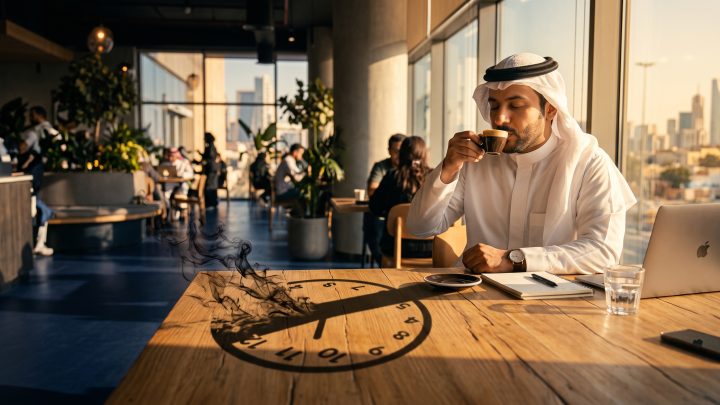
It’s 3:00 p.m. in an air-conditioned office. Your head feels slightly heavy, your focus is slipping, and you feel a mild sense of unease with no clear cause. You consider a third cup of coffee. But before that, there’s a simpler possibility that hasn’t crossed your mind: you haven’t had water since morning.
Thirst is a delayed and inconsistent indicator. It can kick in after your body has already lost some of its water, and it may not show up at all when your attention is focused on a screen. That’s why relying on thirst alone isn’t enough during a long workday at the office.
What happens with a mild deficit?
This isn’t about severe dehydration, but a slight loss of about 1% to 2% of body weight—an amount that slips by unnoticed.
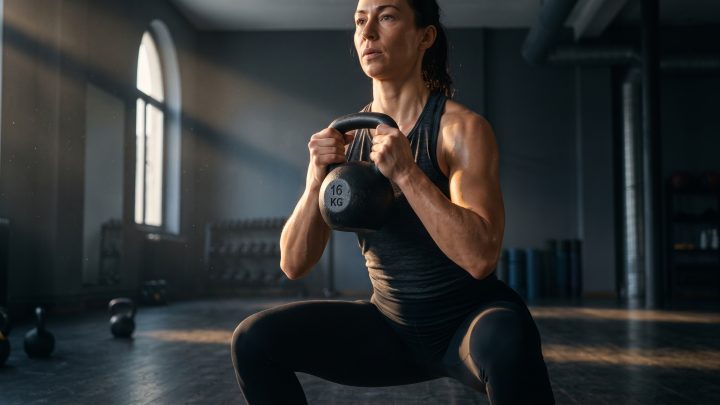
In a trial involving 26 young men, where this loss was induced through light exercise in a warm environment, researchers observed a decline in cognitive performance and mood: greater fatigue, lower alertness, and more difficulty completing cognitive tasks. In a parallel trial with 25 young women at a similar level of fluid loss, a wide range of mood states and symptoms was affected: headache, fatigue, confusion, lower energy, and a feeling that moderate effort had become harder.
In fairness, here’s what both trials didn’t show: the samples were small and made up of healthy young adults, and the fluid loss was induced through exertion and heat rather than eight hours of sitting without drinking. What we have is a documented mechanism—mild fluid loss affects mood and attention—rather than a direct measurement of a workday at a desk. But it’s enough of a mechanism to make the possibility worth ruling out first.
The practical takeaway: before you put an afternoon dip in focus down to weak discipline or poor sleep, check the simpler possibility first.
Why do air-conditioned offices make it worse?
For three compounding reasons:
The air is less humid. Air conditioning dries the air, so you lose fluid through breathing and skin without visibly sweating.
The loss is invisible. When you don’t see sweat, your brain receives no prompt. Outdoors, the sweat itself serves as a reminder.
Cool air dampens thirst. You’re less likely to reach for water when you’re sitting in a cold room.
Add to that how we move around here every day: stepping briefly into high heat, returning to air conditioning, and repeating that cycle several times—with every transition drawing on your reserves without you noticing.
Five practical habits
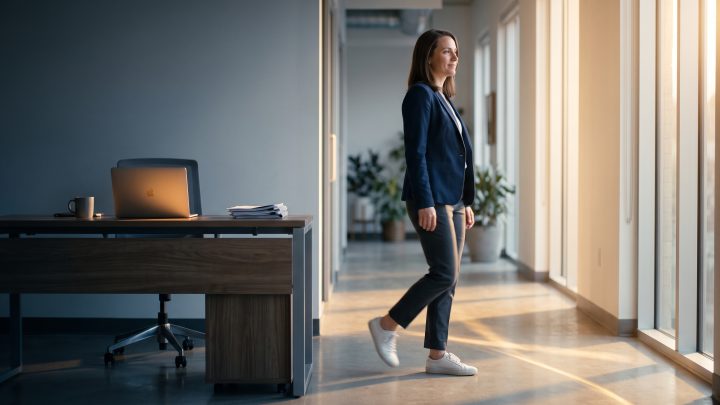
Tie drinking to routines, not targets. One glass when you first sit at your desk, one every time you move between meetings, and one before lunch. Linking water to a set trigger works better than a general intention to drink more.
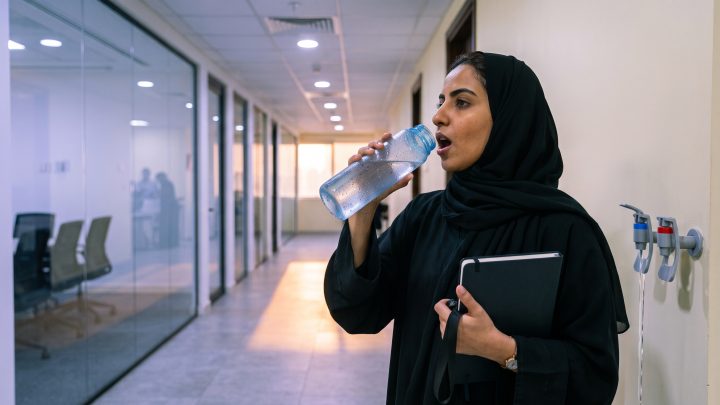
Keep water in your line of sight. A bottle on your desk works better than any phone reminder. The opposite is also true: water kept in the kitchenette on another floor means you won’t drink it.
Check urine color, not volume. Pale yellow is a good enough practical indicator for most people. A darker color is a signal that you’re falling behind.
Count coffee and tea toward your fluid intake, not as a replacement for water. Both contribute to the total, but relying on them alone means heading into the afternoon with borrowed alertness layered over mild dehydration.
Take water with you on the move. Fifteen minutes in a hot car before an appointment isn’t a minor detail during a Gulf summer.
When is the rule different?
This article is for people in good general health working office jobs. If you work outdoors in the heat, your needs are entirely different and include electrolyte replacement, and you should follow the occupational safety guidelines at your worksite. If you have a medical condition that requires managing your fluid intake, or take medications that affect hydration, the right amount for you should be determined by your doctor, not a general rule.
Nor does it make sense to turn hydration into another tracker you chase. The goal is a simple habit, not a tracking project.
Across the team
The simplest workplace intervention: water placed where people actually walk past, and an office culture where stepping out to refill a bottle mid-meeting isn’t awkward. A small detail—and its effect shows up in the afternoon.
Your step today
Set a water bottle on your desk tomorrow morning before opening your email, and tie every short break to a glass of water. Then notice how 3:00 p.m. feels: was it easier than yesterday?