Caffeine and Sleep: Why Don’t You Feel the Afternoon Coffee Stealing an Hour of Your Sleep?

You sit at your desk at 4:00 PM, feeling the post-lunch slump, so you order an extra cup of coffee to restore your focus. Then you go to sleep at your regular time and assume everything is fine.
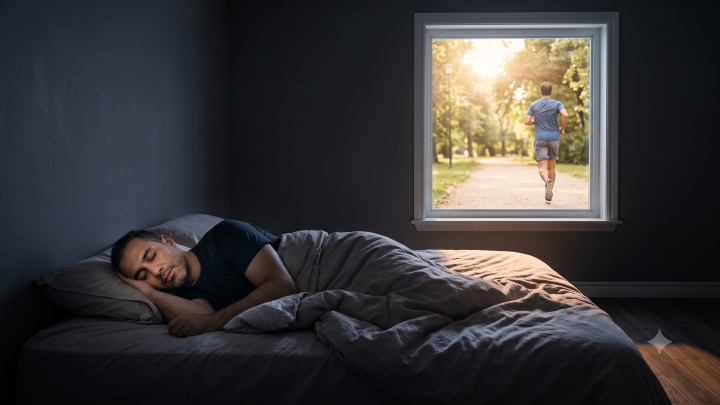
However, a rigorous scientific study showed that the coffee you drank six hours before bedtime reduced your actual net sleep time by more than a full hour—without you noticing it at all.
📌 When to Consult Your Doctor?
Adjusting caffeine timing helps improve your daily sleep quality. However, if you suffer from persistent difficulty sleeping for more than three weeks despite cutting off stimulants early, feel severe sleepiness while driving or working, or wake up gasping for air, these are signals requiring a consultation with a specialist physician to evaluate your sleep quality and assess the condition.
The Gap Between What You Feel and What the Sleep Tracker Records
In a study published in the Journal of Clinical Sleep Medicine (2013), researchers tested the effect of 400 mg of caffeine (about two to three cups of coffee) at three different times: at bedtime, three hours before bedtime, and six hours before bedtime.
Portable devices recording participants’ sleep at home revealed that sleep was clearly disrupted across all three timings. Even when caffeine was consumed six hours before bedtime, total actual sleep time decreased by more than 60 minutes.
More importantly, the official press release issued by the American Academy of Sleep Medicine noted that participants’ self-reports indicated they did not notice any disruption!
Saying “coffee doesn’t affect my sleep” is not conclusive evidence; participants felt the exact same way while the measuring device was recording a full hour stolen from their deep physical sleep.
Why Does the Effect Last for Six Hours?
Because your body eliminates caffeine very slowly.
A review issued by the U.S. Food and Drug Administration (FDA) clarifies that the half-life of caffeine in healthy adults ranges between 2 to 6 hours. Half-life means the time your body needs to eliminate only half of the amount.
This means half of the caffeine in your cup at 4:00 PM is still circulating in your bloodstream at 10:00 PM. Furthermore, kinetic data demonstrated that larger doses prolong the duration caffeine remains; a large cup does not just increase alertness intensity, but extends the duration of its effect inside your body.
How Do You Calculate the Time for Your Last Cup?
A simple sensitivity rule: your bedtime minus at least 6 hours.
If you go to sleep at 11:00 PM 👈 your last cup is at 5:00 PM.
If you go to sleep at 10:00 PM 👈 your last cup is at 4:00 PM.
(Methodological note: The study tested a dose of 400 mg, and individual variation in caffeine metabolism speed is broad. The calculation above represents a general preventive framework to protect your sleep).
🎯 This Week’s Exercise: Set your regular bedtime for this week, and set an alarm on your phone 6 hours prior to bedtime to mark the complete cutoff for all sources of caffeine.
3 Alternatives for the Afternoon Slump
Often, you don’t need coffee as much as you need to address the post-lunch energy drop:
A 10-Minute Walk: A brisk walk in the hallway or around the building increases oxygen flow and alertness without remaining in your body all night.
Exposure to Natural Light: Stepping out into the sun for a few minutes immediately resets your biological clock.
Caffeine-Free Beverages: Rely on herbal tea or cold water if the habit is simply holding a warm mug while working.
Conclusion
Adjusting caffeine timing is a small step that gives you back an hour of your lost sleep. Do not rely on your momentary mental impression; the body needs a stimulant-free environment to restore its vitality and support your overall Holistic Wellbeing. Adjust the timing of your last cup today, and enjoy deeper sleep and higher energy tomorrow to protect your Physical Health.
🌙 Your Action Step Tonight: If you feel sluggish right now, replace your evening cup of coffee with a glass of cold water or a short walk, and observe how easily you fall asleep and how alert you feel tomorrow morning.
Frequently Asked Questions
I drink coffee right before sleeping and fall asleep immediately; am I exempt from this?
Not necessarily. The ability to fall asleep quickly does not mean your sleep quality isn’t negatively impacted; caffeine reduces the deep sleep phase and cuts into total biologically measured hours without you feeling yourself wake up.
Does this apply to tea and energy drinks as well?
Yes. What matters is the total amount of caffeine and its timing, not the type of beverage. Read the amount listed on the label and apply the same six-hour rule.