Your Actions Are the Mirror Shaping Your Child’s Future

As a parent, your words and actions are not merely fleeting daily details. They are the foundational building blocks that shape your child’s personality, self-image, and worldview.
The parenting journey is filled with constant challenges and shifts, often presenting itself as a daunting responsibility. However, it is vital to remember that every action you take and every word you speak becomes a living blueprint from which your child learns how to think, feel, and behave.
By cultivating mindfulness around your actions, you can build a secure future for your child—laying a bright foundation rooted in trust, respect, and healthy relationships.
Why Do Your Actions Matter More Than Your Words?
Children do not internalize values through verbal advice as much as they do from the real-life situations they observe and share with their parents. When your child witnesses your daily behavior, they absorb lessons that are far more authentic and lasting than mere words.
Avoiding Mixed Signals: We may speak to our children about the importance of tolerance, yet they hear us complaining about the neighbors. We might emphasize honesty and fairness, yet they see us bend the rules to make our own lives easier. This discrepancy sends conflicting messages, leaving the child deeply confused between what they hear and what they see.
Living Lessons: When values are translated into daily practices, they become living lessons etched into a child’s memory. A child learns compassion when they watch you support a friend in distress; they understand honesty when they see you admit a mistake and work to correct it. These seemingly small moments leave a far deeper psychological impact than words alone.
Navigating Diverse Environments: It is natural for children to encounter differing values among peers, other families, or through the media they consume. Here, the parental role is to clarify that while values may vary across environments, the core principles practiced at home serve as the anchor. This home foundation helps them build a future guided by strong, steadfast values.
How Does Your Behavior Reflect on Your Child?
Positive parenting does not imply an absence of rules or firmness. Rather, it is built on cultivating a relationship of mutual love and respect. Through simple, mindful daily habits, you can support your child’s growth in a healthy environment that fosters self-confidence and carefully shapes their future.
Here are some highly effective, practical strategies:
1. Leverage Positive Reinforcement
Acknowledge your child’s positive behavior through warm praise, affectionate touch, or simple, meaningful rewards. Do not wait for a mistake to offer feedback; instead, celebrate their small daily victories.
Be Specific with Your Praise: Instead of generic compliments, use clear, emotionally expressive statements:
“You cleaned up your toys all by yourself—that makes me so proud of you!”
These precise details give children a profound sense of appreciation, making them more confident and self-motivated.
2. Separate Your Child from Their Behavior
It is entirely normal for children to go through developmental phases where they exhibit challenging behaviors, such as stubbornness or arguing with peers. However, it is critical to remember that temporary behavior does not define your child’s inherent character.
Preserve Their Self-Worth: Assure your child that you know they are naturally kind and gentle, but explain that their recent behavior does not reflect who they truly are.
The Power of Framing: If you react in anger or punish your child as if they are a “bad person,” they will begin to view themselves that way. Conversely, when you focus strictly on the behavior, you send a clear message: the action itself needs adjustment, but their personal value is secure.
3. Deliver Guidance with Positive Framing
The way you phrase your instructions directly influences how your child responds.
Model Calmer Expression: When you use positive phrasing, such as “Please use your quiet voice” instead of “Stop yelling,” you are not simply enforcing a rule—you are modeling a crucial self-regulation skill.
Your child sees your calm demeanor as a model to emulate, learning that requests can be communicated with a respectful tone rather than harsh demands.
4. Normalize Admitting Mistakes
Some believe that apologizing weakens a parent’s authority. In reality, it demonstrates emotional integrity and inner strength.
When you tell your child, “I am sorry for raising my voice,” you teach them that making mistakes is human and that admitting them is a strength.
Through this simple act of vulnerability, they learn that healthy relationships are built on honesty and mutual respect, not artificial perfection.
5. Consistency Makes All the Difference
Children do not learn from isolated events or fleeting comments. Instead, they learn from behaviors observed consistently day after day.
Every time you practice patience, keep a promise, or admit a mistake, you reinforce a value that takes root deep within your child’s psyche.
This consistency is what transforms values into an organic part of their character, ultimately helping you secure their future development.
6. Provide a Safe Space for Growth and Learning
The parental role goes beyond giving instructions; it is about providing a space where children feel safe to fail and learn. When your child knows that home is a secure environment for exploration and self-expression—free from the fear of humiliation or harsh punishment—they develop greater self-esteem and a stronger capacity to navigate life’s challenges.
Every word or action in your child’s presence shapes their emerging personality. Even the simplest daily interactions carry a powerful message from which your child learns how to treat themselves and others.
Practical Ways to Build Trust with Your Child
Trust between parent and child does not develop automatically; it is built brick-by-brick through small daily interactions and repeated experiences. When your child feels your consistent presence and support, they feel safer expressing themselves and exploring the world around them.
Here are four foundational pillars to help you build this essential trust:
1. Nurture a Loving, Attentive Relationship
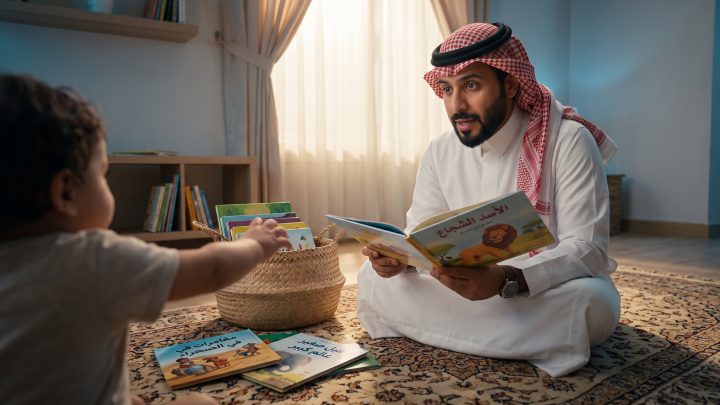
Above all, children need a deep sense of love and belonging. Dedicate quality time to them: converse, play, embrace, and read together. These simple, daily interactions strengthen emotional bonds, foster their psychological well-being and cognitive development, and help you build their future.
2. Serve as Their Secure Base
As your child begins to explore the world, they must know you are always there to support and protect them. Encourage them to experiment and try new things, while offering comfort and reassurance—especially in unfamiliar situations. This balance between autonomy and protection cultivates inner confidence and independence.
3. Design Safe Environments for Exploration
Children learn primarily through play and discovery. Provide them with a safe environment filled with age-appropriate, simple materials to explore, such as household items or natural elements. Be present to share in their experiences, and show genuine enthusiasm for their small achievements.
4. Respond Sensitively to Their Cues
Children communicate their needs in diverse ways: through crying, gestures, eye contact, or vocalizations. Pay close attention to these cues and strive to understand what they need in the moment—whether it is hunger, fatigue, or a desire for play. Your responsive and sensitive reactions to your child’s signals foster a deep sense of security and fortify your emotional bond.
Ultimately, remember that every small action you take today is a profound lesson for your child tomorrow. When you offer them love, respond to their needs, and provide security, you are not merely building temporary trust—you are embedding lifelong values.
Your daily actions—no matter how simple they may seem—are the mirror through which your child views themselves and the foundation upon which their future is shaped. Be the role model who inspires them, because your actions are indeed the mirror building your child’s future.