Uncertainty: Why Does Waiting for News Exhaust You More Than the News Itself?
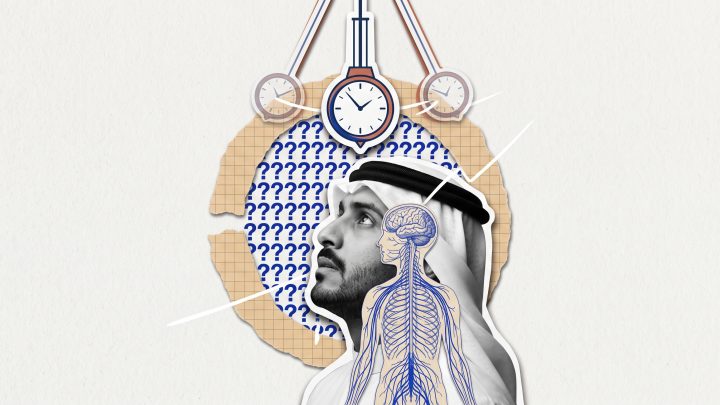
You sit at your desk nervously anticipating a crucial email regarding your department’s restructuring, or you check your phone constantly waiting for the results of your performance review. You feel mounting stress and a pressing urge to know the decision right now, regardless of the outcome.
Uncertainty is not merely a nagging feeling that precedes bad news; it is the primary source of stress itself. Scientific experiments have demonstrated that your body responds to high levels of ambiguity with significantly greater biological stress than it does to knowing a negative outcome is inevitable.
📌 When to Consult a Mental Health Professional?
Ambiguity coping skills help manage changing workplace situations. However, if uncertainty turns into a state of paralysis that prevents you from completing your work, causes persistent insomnia, or leads to panic attacks lasting for more than two weeks, these are signals that go beyond temporary work stress and require reaching out to a mental health professional for support.
What Happens to Your Body in a State of Ambiguity?
In an experiment published in Nature Communications (2016), researchers from University College London tested participants’ responses to scenarios with varying degrees of predictability.
The researchers measured stress using four biological indicators: cortisol levels, pupil dilation, electrodermal activity, and self-assessment.
The results showed that knowing there was a small probability of a painful event generated higher stress than knowing the event was definitely going to happen. All four metrics tracked the level of uncertainty rather than the magnitude of the impending threat.
The biological reason: Your body heightens its state of alertness during ambiguity to urge you to pay attention and learn. The problem begins when this heightened state persists for weeks in situations that cannot be resolved through further thinking or analysis.
The Impact of Uncertainty on Your Workday
In the “Work in America” survey published by the American Psychological Association (APA 2025, covering more than 2,000 employees), 54% of employees stated that job insecurity directly impacted their stress levels.
The contrast was striking between those working in organizations undergoing structural changes (70% stress) and those whose organizations experienced no changes (39%). Furthermore, rates of difficulty focusing and emotional exhaustion doubled among employees waiting for change.
These numbers reveal a tangible truth: Employees had not lost their roles yet, but the cost of waiting consumed their attention and mental energy long before anything happened officially.
Why Continuous Attempts at “Certainty” Fail
When you feel uncertainty, your instincts push you toward repeated checking: asking a colleague, refreshing your email, and scouting rumors.
These attempts provide temporary relief for a few minutes, but anxiety returns even stronger. What exhausts you is not a lack of searchable information, but irreducible uncertainty—knowledge that has not yet formed for anyone. Searching for an answer that does not exist yet doubles your stress instead of relieving it.
3 Tools for Dealing with Uncertainty
Categorize Your Sphere of Control in Writing: Draw two columns on a piece of paper. Column 1: “What I Cannot Control” (timing of the decision, the decision itself). Column 2: “What I Can Control” (the quality of my daily work, updating my skills, my professional relationships). Writing down these points declutters your mental space.
Define the Worst-Case Scenario and Your First Step: Do not leave fears floating in your mind. Write down the worst possible scenario, and right underneath it, write three specific steps you will take if it comes true. A written plan strips fear of its harshness.
Designate a Timed “Worry Window”: Set a fixed 15-minute window daily to think about the topic. When intrusive thoughts strike outside this window, disrupt them by reminding yourself of the scheduled time.
🎯 This Week’s Exercise: Get a sheet of paper, divide it into two columns, and write down three tasks in the control column that you can accomplish this week regardless of the pending career decision.
Conclusion
Uncertainty is a test of your attention management, not your toughness. The cost of waiting comes from trying to confirm something whose time has not yet arrived. Focus on what you own today, and let written rules manage your moments of stress to support your overall Psychological Well-being.
🌙 Your Action Step Tonight: Dedicate 15 minutes before bed to write down the anxious questions weighing on your mind in a notebook, and write one actionable step you control next to each question to address it tomorrow.
Frequently Asked Questions
Should I stop following up on evaluation news or changes?
No, objective follow-up is necessary. What you should stop is “compulsive, repetitive checking” of emails or notifications several times an hour without any new updates, as this drain does not change the decision—it only exhausts your energy.
Doesn’t preparing for the worst increase stress levels?
Vague, floating thoughts about the worst-case scenario increase stress. However, writing it down and turning it into three practical, defined steps ends mental rumination and shifts you into a state of readiness and execution.