Practical Steps: How Breathing Exercises Help Calm Your Child’s Anger and Anxiety
Just like adults, children are highly susceptible to psychological and emotional stress. This pressure can stem from everyday stressors—such as starting a new school year or worrying about an upcoming exam—or deeper developmental challenges, including physical changes and interpersonal conflicts with friends or parents.
With the rise of social media, the burden on young minds has only intensified. Children are now exposed to constant peer pressure and unrealistic expectations that follow them right into their homes. These modern challenges make it essential for children to learn healthy self-regulation strategies early in life, ensuring that accumulated stress does not turn into long-term mental and physical health issues.
This is where breathing exercises serve as a simple, highly effective tool to help children immediately calm their minds and bodies in moments of distress.
Why Do Children Experience Anger and Anxiety?
It is entirely natural for children to go through phases of anger and anxiety. Childhood is a rapid developmental stage packed with transitions and novel experiences that can feel highly overwhelming.
Key triggers for childhood stress include:
Academic Pressures: Transitioning to higher grades, accompanied by heavier workloads and more demanding exams, can cause significant psychological strain.
Social Dynamics: Forming new peer groups or navigating the fear of rejection can trigger deep-seated social anxiety.
Physical and Emotional Changes: As children grow, they become more intensely aware of themselves and their emotions, making them highly sensitive to their environment.
Fear of the Unknown: Any disruption to their established daily routine—such as moving to a new neighborhood or starting an unfamiliar activity—can trigger internal tension.
These compounding factors often manifest outwardly as irritability or temper tantrums. To prevent this, parents must equip children with healthy coping mechanisms, such as breathing exercises, to help them regulate tension and restore their inner balance.
What Are Breathing Exercises, and How Do They Help?
When a child feels afraid, angry, or stressed, their body initiates an innate physiological response known as the “fight-or-flight” response. During this state, their heart rate accelerates, their muscles tighten, and their breathing becomes rapid and shallow. This physical response directly amplifies their feelings of emotional panic and distress.
Fortunately, our bodies have a built-in neural reset button called the “relaxation response.” We can deliberately activate this system through deep breathing. Deep breathing restores the heart rate and respiratory rhythm to normal levels, signaling to the brain that it is safe to return to a state of focus and tranquility.
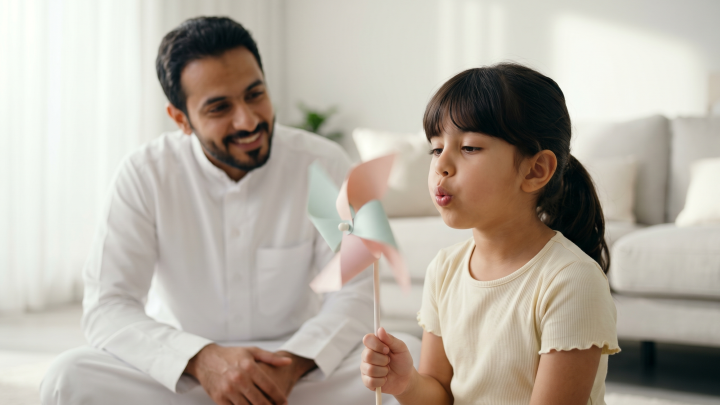
Here is a curated selection of simple, highly engaging breathing exercises you can teach your child to help them manage their emotions and regain calm:
1. The Cupcake Breath
Ask your child to imagine holding a warm, freshly baked cupcake.
Step One (Inhale): Have them breathe in deeply through their nose, pretending to smell the delicious aroma of warm chocolate or vanilla.
Step Two (Exhale): Have them blow out slowly through their mouth, pretending to gently cool down the hot cupcake.
This exercise is perfect for children up to five years old, serving as a playful and intuitive introduction to breath control.
2. Smell the Rose, Blow Out the Candle
Ask your child to imagine holding a beautiful flower in one hand and a glowing candle in the other.
Step One (Inhale): Have them inhale slowly and deeply through their nose, pretending to enjoy the sweet fragrance of the flower.
Step Two (Exhale): Have them exhale gently through their mouth, pretending to blow out the candle’s flame.
This simple visual prompt is highly effective for younger children, helping them grasp the physical mechanics of deep respiration step-by-step.
3. The Five-Finger Breathing Exercise
(Best suited for children aged 6 to 8).
This highly tactile and visual exercise helps children quickly soothe their nervous systems by focusing their minds on physical touch and rhythmic breathing.
The Setup: Have your child hold one hand open in front of them like a star. Instruct them to place the index finger of their opposite hand at the base of their thumb.
Inhalation (Sliding Up): Have them inhale deeply and slowly through their nose while tracing their index finger up to the tip of their thumb.
Exhalation (Sliding Down): Have them exhale slowly and completely through their mouth as they slide their index finger down the other side of the thumb toward their palm.
The Cycle: Have them repeat this pattern for all five fingers—breathing in as they slide up, and breathing out as they slide down—until they have traced the entire hand.
By pairing slow finger movements with respiration, this practice lowers neurological arousal and provides instant emotional grounding.
4. Deep Abdominal Breathing (Belly Breathing)
This is the gold standard for reducing physiological stress and regulating heart rate.
Step One: Have your child place both hands flat over their belly.
Step Two (Inhale): Instruct them to inhale slowly and deeply through the nose for 4 seconds, feeling their abdomen expand like a balloon.
Step Three (Hold): Have them gently hold their breath for 7 seconds.
Step Four (Exhale): Ask them to release the air slowly and completely through their mouth for 8 seconds, feeling their hands sink as the belly deflates.
The Key Benefits of Breathing Exercises for Children
These breathing exercises are far more than just fun activities; they are clinically supported tools that yield extensive benefits for a child’s psychological well-being and developmental health:
Soothes the Nervous System: Deep breathing directly decreases muscular tension and slows a racing heart, counteracting the immediate physical symptoms of anxiety.
Reduces Outbursts and Irritability: Children often express overwhelming emotions through shouting or crying. Regular breathing practices offer an emotional buffer, allowing them to self-soothe before their feelings escalate into a full tantrum.
Improves Focus and Attention Span: Deep breathing increases oxygen delivery to the brain. This sharpens cognitive clarity, allowing children to focus better on school lessons and complete their homework with fewer distractions.
Promotes Restful Sleep: Nighttime anxiety is a major cause of sleep issues. Practicing breathing exercises before bed quiets an overactive mind, making it easier for children to fall asleep and enjoy deeper, higher-quality rest.
Empowers Self-Control and Confidence: When a child learns they can physically calm their own body using only their breath, they develop a profound sense of emotional autonomy. This self-efficacy significantly improves their self-confidence when facing challenging social situations or academic exams.
Simple Strategies to Introduce Breathing Exercises
If you are concerned that your child might find it difficult to sit still and practice, use these highly effective, parent-friendly strategies to introduce the concepts:
Rhythmic Counting: Turn breathing into a rhythmic game. Encourage them to inhale for four counts, hold for four, and exhale for four. This structure provides a comforting, predictable pattern.
Utilize Visual Aids: Use interactive toys, such as an expanding “mindfulness sphere” (a Hoberman sphere) that expands and contracts. Have your child synchronize their inhales and exhales with the motion of the sphere to make the practice highly visual and engaging.
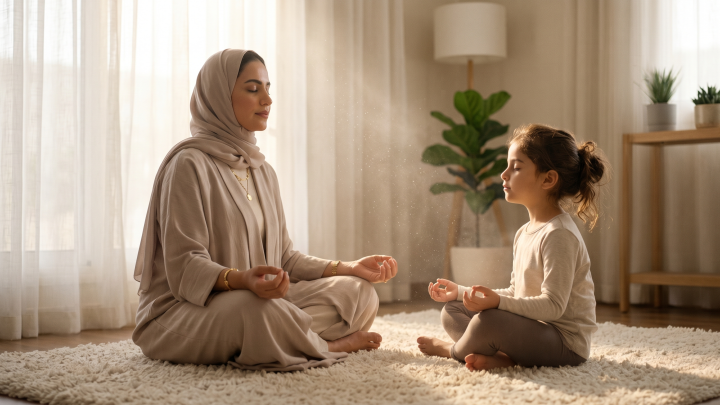
Establish a Calm Environment: Dedicate a quiet, cozy corner of your home for relaxation—completely free from digital screens, loud noises, and distractions. This safe space allows the child to comfortably look inward and focus on their physical state.
When Should You Consult a Professional?
While experiencing occasional anxiety or anger is a standard part of childhood, it becomes a concern when these emotions begin to dominate your child’s daily life, preventing them from participating in normal, age-appropriate activities.
Consider seeking professional guidance from a pediatric counselor or child psychologist if you notice any of these behavioral warning signs:
Your child’s anger or anxiety is exceptionally intense, grows progressively worse over time, and does not respond to standard comforting techniques.
Emotional distress severely interferes with daily functions, such as going to school, eating, or playing with friends.
Your child actively avoids places, hobbies, or social activities they previously loved due to fear or worry.
Chronic stress begins to erode their self-esteem, causing them to withdraw socially or isolate themselves.
In these instances, a specialized child psychologist can provide targeted therapeutic interventions to help your child learn to navigate their emotions safely and constructively.
Conclusion
Ultimately, anger and anxiety are entirely natural aspects of a child’s developmental journey. The ultimate role of parents is not to eliminate these emotions entirely, but to equip children with the proper coping mechanisms to navigate them healthily.
By teaching simple, scientifically proven tools like breathing exercises, you provide your child with a lifelong asset. With your patient guidance and support, they will discover that self-regulation is not just a temporary fix, but an invaluable life skill—instilling a deep sense of psychological resilience, empathy, and confidence that will serve them well into adulthood.