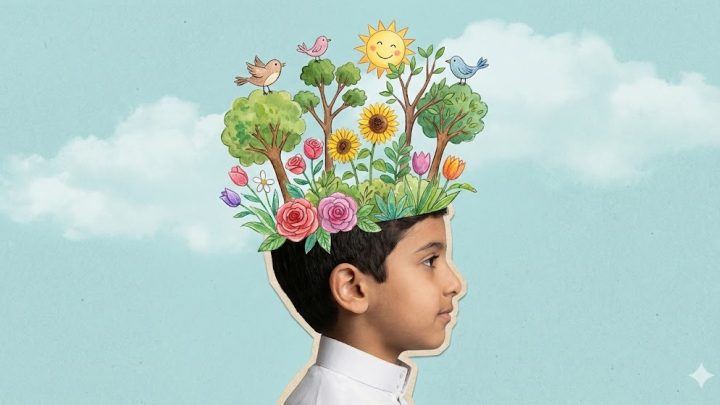
Positive Thinking: Shielding Your Child from Anxiety and Depression

Middle childhood (ages 9–12) is a pivotal chapter in your child’s life. It is the time when their personality takes shape, their thinking patterns evolve, and they begin to take their first steps toward independence and responsibility.
As their social circle expands to include schoolmates and friends, they become more exposed to both positive and negative influences. To navigate this, they need a set of skills to distinguish between the two. Foremost among these skills is Positive Thinking. This isn’t just a mindset; it is a psychological shield that protects your child’s mental health and guards them against anxiety and depression—issues that are becoming increasingly common even at young ages.
What Does “Positive Thinking” Mean for Kids?
Positive thinking doesn’t mean ignoring life’s difficulties or pretending everything is perfect. It is a mental and emotional ability to interpret daily events in a balanced way, handle negative thoughts healthily, and learn from them.
For a child aged 9–12, positive thinking means:
Learning from mistakes: Viewing problems as lessons that help them grow, not as roadblocks.
Self-Encouragement: Using an inner voice that motivates rather than criticizes (“I can try again” vs. “I am a failure”).
Seeing the good: Learning to spot the positive traits in themselves and others.
Resilience: Building the confidence to succeed while understanding that failure is a natural part of life that can be managed.
Note: This skill doesn’t appear overnight. It is built gradually with the support of parents and schools, creating a nurturing environment.
How Positive Thinking Boosts Mental Health
Acquiring this skill can transform your child’s well-being. Here is how it works as a protective factor:
Reducing Anxiety: A positive child views stress as a challenge to overcome rather than a threat. This perspective lowers cortisol levels and reduces psychological tension.
Building Self-Confidence: When a child focuses on their strengths and celebrates small wins, they build a balanced self-image. This protects them from the spiral of self-blame and frustration.
Improving Social Relationships: Positive thinkers are more accepting of differences and less judgmental. Building supportive friendships is one of the strongest defenses against depression.
Enhancing Adaptability: At this age, children face physical and emotional changes. Positive thinking helps them accept these changes with an open mind instead of fear.
Preventing Early Depression: Studies show that children who expect the worst are more prone to depression. Positive thinking builds a “mental immunity,” creating a resilient mind capable of weathering storms.
Why Do Some Children Lose Their Positivity?
Children are naturally spontaneous and optimistic, but certain factors can dim this light:
Negative Environments: A home or school filled with constant comparison, bullying, or discouraging words can distort a child’s self-image.
Difficult School Experiences: Academic struggles, fear of failure, or social isolation can turn school into a source of stress rather than learning.
Comparison: When parents constantly compare a child to siblings or peers, it fuels feelings of inadequacy and anxiety.
Lack of Emotional Support: Without empathy and validation from adults, a child may struggle to process negative emotions healthily.
How Parents Can Cultivate Positive Thinking
You are your child’s primary teacher. Here is how you can plant the seeds of positivity:
Be a Role Model: Children mimic what they see. If you handle problems calmly and speak positively, your child will adopt the same approach.
Encourage Open Dialogue: Create a safe space for them to express fears. Don’t judge; instead, guide them to reframe negative feelings into positive actions.
Use Positive Language: Swap criticism for motivation.
Instead of: “You are lazy.”
Say: “I know you have the energy to put in more effort.”
Celebrate Small Wins: Acknowledge their progress, no matter how minor. This reinforces the belief that they are capable of success.
The Role of the School
Schools are partners in building your child’s character. They can support this by:
Creating a Supportive Classroom: Focusing on motivation and reward rather than just punishment fosters cooperation and reduces stress.
Teaching Life Skills: integrating programs that teach problem-solving and resilience, not just academic subjects.
Encouraging Creativity: Arts, music, and sports help children discover their passions and express themselves, building internal confidence.
Training Teachers: Teachers should be equipped to be positive role models and mentors.
Combating Bullying: Strict anti-bullying programs create a safe haven where positive personalities can thrive.
Final Thoughts
Teaching positive thinking to a child aged 9–12 is not a luxury; it is a necessity. It is the foundation for a healthy adolescence. When parents and schools work together to nurture this skill, we give our children the ultimate psychological armor—making them resilient, optimistic, and ready to face the future with confidence.